Many people interested in solar panels want to know about solar panel efficiency. Efficiency is one of the most important data to consider when choosing the solar wafers that will make up your solar panel. Solar panel efficiency is a measure of the amount of sunlight falling on the surface of a solar module. Therefore, it is considered one of the most important data when buying solar panels.
As Efta Energy, we enlighten you on many issues such as solar panel efficiency and performance. Our company offers clean and sustainable energy solutions. Our main topic is, of course, solar energy. We provide a wide range of services. We produce solutions for agricultural facilities, industrial areas, commercial buildings and single-family houses. We are also concerned about environmental problems and rising energy costs. We install solar energy systems in accordance with regulations and procedures. Thanks to energy efficiency, we also provide support for saving measures. We want to facilitate access to renewable energy technologies for everyone who wants it. We carry out our work in this direction.
Our company, one of the leading companies in Konya, was established with 80% partnership of Doğan Oksijen. Doğan Oksijen has a long history of 65 years. This long history not only provides economic support. On the other hand, it helps us to continue our activities with a strong partnership structure. The other partners of our company consist of people with academic backgrounds related to the sector. Therefore, our knowledge and expertise increases thanks to these partners. We continue our activities in the sector with an experienced, young and dynamic team of engineers and technicians. Thanks to our fully equipped and experienced team, we realize successful projects.
Table of Contents Toggle What is Solar Panel Efficiency?What Determines the Efficiency of Solar Panels?Photovoltaic CellsLigaments and ModelingSolar Panel LifetimeWhat Factors Affect the Efficiency of Solar Panels?Solar IrradiationTemperaturePanel PositionSlopeShadingThe Most Efficient Types of Solar PanelsCrystallized Silicon Solar PanelsPERC Solar PanelsHalf Cell Solar PanelsBifacial Solar Panels
What is Solar Panel Efficiency?
Solar panel efficiency refers to the potential to convert sunlight into electricity per square meter. A solar panel with an efficiency of 17%/m2 means that 17% of the total light captured by the equipment will be used to generate electricity for consumption.
As a result, the higher the efficiency of the solar panel, the greater the amount of electrical energy generated per m2 with the same amount of incident light. Solar panel efficiency, as reported by manufacturers, is measured through a globally recognized test that uses a set of values. Standard Test Conditions is a standard defined by the solar industry to certify the quality and efficiency of the equipment.
There are three standard test conditions for calculating solar panel efficiency. These are:
- Cell temperature: The cell temperature is considered to be 25 degrees. This is the temperature of the solar panel itself, not the temperature of the environment. During the test, the solar panel should be at 25 degrees.
- Solar radiation: Solar radiation is defined as 1000 Watt m². This is the amount of energy that falls on a given area in a given location. The figure is the average of the amount of sunlight that falls on the earth's surface.
- Air mass The air mass is considered to be 1.5. This number is difficult to measure. Because it refers to the amount of the Earth's atmosphere that light must pass through before it reaches the ground. It is essentially the angle of the sun relative to a reference point on Earth.
At Efta Energy, we care about solar panel efficiency. Therefore, we consider many factors before installation. We are aware of all the challenges that arise during the implementation of solar energy projects. We develop a wide range of strategies to overcome these challenges. Some factors such as changes in procedures and regulations, legal permits, product supply problems prevent projects from moving forward. Situations such as the inability to establish facilities have a negative impact on investment decisions. This naturally leads to missed potential revenue opportunities.
In addition, if projects fail, companies experience an increase in energy costs and are unable to reach their targets. In order to prevent all these difficulties, we take into account the bureaucratic requirements during the project design process and make it possible to speed up the processes. We provide consultancy services by providing expertise in compliance with procedures and regulations. On the other hand, our company optimizes product procurement processes and reduces costs. By closely following technological developments, we produce the most effective solutions. We also support the cost analysis and financing of projects with our financial consultancy services. With these comprehensive practices, we play an active role in the successful completion of our customers' energy projects. By effectively overcoming all the challenges in the sector, we put our signature under successful projects.
What Determines the Efficiency of Solar Panels?
The efficiency of solar panels is defined as their ability to convert light into electricity. But what qualities determine this efficiency? Factors affecting the efficiency of solar panels:
Photovoltaic Cells
Each photovoltaic module consists of a large number of solar cells. The solar cell is the basic operating unit of photovoltaic technology. It is also responsible for the process that converts light into electrical energy. Photovoltaic cells are made of a type of semiconductor material. Each type of semiconductor has its own characteristics that determine its efficiency in electrical conversion. Thus, the efficiency of the solar panel directly depends on the efficiency of its cells. The more efficient the solar cells used in photovoltaic modules, the higher the efficiency of the solar panel.
Ligaments and Modeling
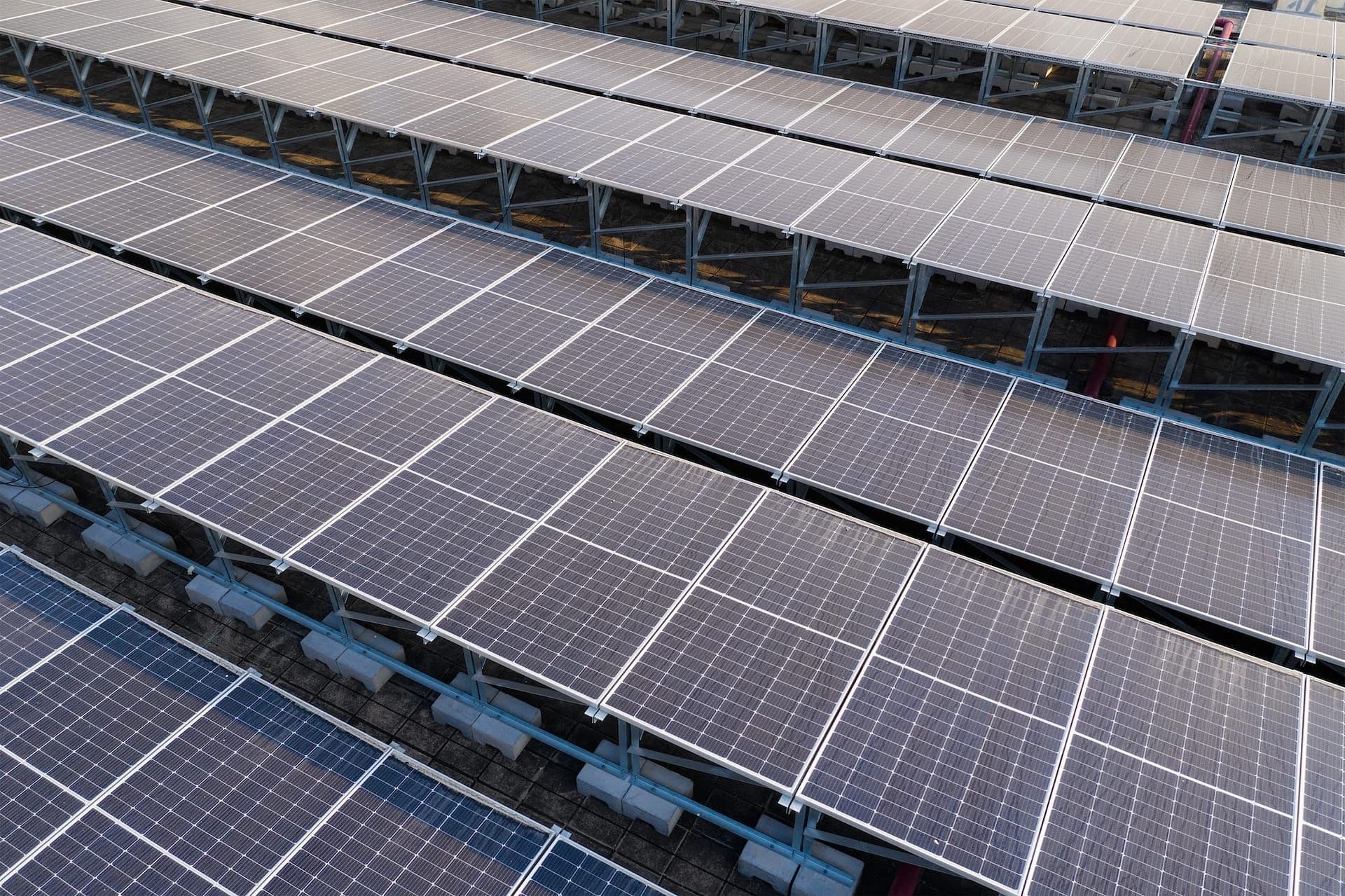
Efficiency is calculated based on the total area of the equipment receiving solar radiation. Therefore, the way the photovoltaic cells are positioned inside the solar panel and the coating component directly affect the efficiency. Photovoltaic modules have dead spaces that prevent efficiency, i.e. areas not occupied by the cells, such as the edges, gaps and frames between them. This is why the efficiency of the solar panel is always lower than the efficiency of each individual photovoltaic cell. This is because these cells have less dead space and use much more light.
Solar Panel Lifetime
Another prominent issue when it comes to solar panel efficiency is the age of the solar panel. Solar panels are known to lose efficiency over time. Annual loss can be ignored. However, after an average of 25 years, 20% of the original efficiency is lost. For this reason, the longer the solar panel is used, the lower the efficiency. However, regular maintenance and cleaning prevent efficiency loss.
At Efta Energy, we take into account what determines the efficiency of solar panels and act accordingly. Managing energy projects presents challenges and opportunities at the same time. Failure of projects can cause problems such as canceling or delaying investment decisions. In addition, not choosing the right applications and lack of information also prevent obtaining the desired efficiency from solar panels. With our experienced and professional staff in the field, we help you achieve high efficiency solar energy projects.
A failed project can also lead to missed potential revenue and growth opportunities. In addition, failed investments in renewable energy and energy efficiency projects can lead to high energy costs for firms and households. It also leads to reduced competitiveness and market share for companies. Unsuccessful projects also mean that ecological footprint cannot be reduced and sustainability goals cannot be achieved. Companies also face some risks such as a decrease in brand value, loss of reputation, and a decrease in customer and investor base.
In addition, the lack of security in energy supply and the failure to achieve energy independence lead to greater vulnerability to changes in energy prices and external shocks. Slowing innovation in the sector undermines technological development and leads to reduced R&D investments. Failed projects even harm economic growth by minimizing employment opportunities.
Efta Energy's successful energy projects offer significant savings and increased profitability for companies and households. Solar panel efficiency is among these projects. Low energy costs and efficient energy use give companies a competitive advantage. This increases their market share and new business opportunities. Successful projects raise ecological awareness and make it possible to achieve sustainability goals. The reputation of companies investing in this area rises, brand value increases, and the number of investors and customers increases. Renewable energy projects make it much easier to achieve energy independence and security of energy supply. This makes them less vulnerable to fluctuations in energy prices and also to external shocks. Successful projects accelerate innovation in the market and inspire other companies.
What Factors Affect the Efficiency of Solar Panels?
Solar panel efficiency, as declared by the manufacturer, is determined by industry-standard tests using fixed values for climatic conditions that affect the equipment's electricity production. These values are explained as follows:
Solar Irradiation
Photovoltaic panels rely on solar energy to generate electricity. They are best and most efficiently used in regions with the highest average annual solar radiation. The year-round availability of light in a particular region is directly related to a number of factors such as the climate and geographical location of that region.
Temperature
On the other hand, temperature changes affect the performance of the photovoltaic cells and consequently the efficiency of the solar panel. The temperature of photovoltaic cells is not the same as the environment. This is because the cells experience an increase in temperature as they receive solar radiation. On average, the temperature of a solar panel is about 20 degrees warmer than the ambient temperature. Since the conditions simulated in the tests do not reflect the real world, the efficiency of the photovoltaic module in practical working conditions is determined by the variation of each one. There are also a number of technical factors in the installation of the solar panel that affect its performance over its lifetime.
Panel Position
The location and installation of the solar panel is considered important for efficiency. Panels need to be installed in a way that ensures maximum and best exposure to the sun's rays during daylight hours. One of the factors to be analyzed to achieve this is the orientation of the panel. It is very important that the panel faces the sun.
Slope
Another issue that affects the solar panel's ability to capture light is the tilt. The tilt of the panel needs to be carefully calculated to ensure that the sun's rays are reflected directly onto the surface of the panel. The solar panel is able to capture the scattered light that is transmitted to its surface, but it makes the most of the rays coming in perpendicularly. The rule of thumb is to set the tilt of the photovoltaic panel at the same angle as the latitude of the location.
Shading
The operation of solar panels depends on light. For this reason, if there is any shadow on their surface, efficiency can be compromised. In order to prevent shadowing of the solar panel as much as possible, objects such as trees, buildings and poles close to the installation site should be investigated. For all these reasons, you need to get support from an expert company to install and design your photovoltaic system and ensure that your solar panel works with optimized efficiency and performance.
Efta Energy considers the factors that affect the efficiency of solar panels in all its projects. In this way, we achieve high efficiency and high customer satisfaction. Our company focuses on environmentally friendly energy sources and especially on solar energy. We always promise our customers sustainable and economical energy solutions.
Solar energy does not harm the environment like fossil fuels. This is why we support our customers in minimizing their environmental impact. As a result, our customers reduce their energy costs and obtain a more sustainable energy source. Investments in solar energy avoid being affected by interruptions in energy supply and ensure business continuity.
By implementing sustainable policies and correct procedures, our company makes the success of energy projects possible through financially favorable interest rates and supported loans. Strategic investments in renewable energy sources make energy production and consumption efficient and economical. This minimizes lost opportunity cost. We also offer financial solutions to protect our customers' revenues in the event of reduced subsidies.
We increase the competitiveness of companies by reducing energy costs. Deeply committed to sustainability, we prevent reputational damage with our eco-friendly energy approach. We diversify energy production and consumption. This allows us to reduce energy security risks. At the same time, we embrace market innovations and help increase efficiency. With all our approaches, we shape the energy sector and become one of the most preferred names.
The Most Efficient Types of Solar Panels
There are a wide variety of solar panel models on the market, some of which are more efficient at converting light into energy, depending on the type of photovoltaic cell used. As new technological features are used in the construction of the panels, some panels are more efficient than others. The most efficient types of solar panels are listed below:
Crystallized Silicon Solar Panels
Solar panels made from crystallized silicon photovoltaic cells have the highest level of efficiency. It is one of the oldest and still one of the most used panels. The greater purity of its structure makes a high efficiency index possible.
PERC Solar Panels
PERC cell technology is a popular technology used by manufacturers to improve the efficiency of crystalline silicon solar panels. It uses a very thin layer on the back of the cells to reflect the sun's rays, allowing the rays to pass through the cell more frequently and increasing efficiency.
Half Cell Solar Panels
Solar panels with split or half-cell technology use silicon photovoltaic cells that are cut in half. This increases their durability and efficiency. It is one of the panels that guarantee greater efficiency.
Bifacial Solar Panels
Conventional solar modules capture sunlight only from the front, where the photovoltaic glass allows light to pass through. Bifacial solar panels, on the other hand, capture light from both sides, at the back and front. This naturally leads to increased efficiency.
As Efta Energy, we determine which solar panel is the most efficient for your project through various applications. With the solutions we offer in the field of energy efficiency, we aim to reduce the energy costs of companies and residences and optimize the use of resources. With our long years of experience in the energy market and our team of experts, we offer the best and most comprehensive solutions to our customers. This encourages our leadership in the energy sector.
By focusing on customer requirements, we aim to minimize energy consumption, reduce costs and support sustainable energy use. We attach great importance to the right strategy and planning in the projects we undertake. At these stages, we use our experience and expertise to produce the most suitable solutions for our customers' needs. We help our customers to successfully implement projects and achieve their energy targets.
To discover the best energy solutionsContact Efta Energy now!
Want to discuss a solar project for your facility?
Tell us about your site and our engineering team will scope feasibility, ROI and procurement.